When Life ReRoutes You, Saying Yes to the Unexpected (Part 1 of 2)
BLOG POST — PART 1 OF 2

When Life Reroutes You: Saying Yes to the Unexpected
On trusting the body's first answer — even when the mind has other plans.
I went to Mexico on vacation. That was the plan, anyway.
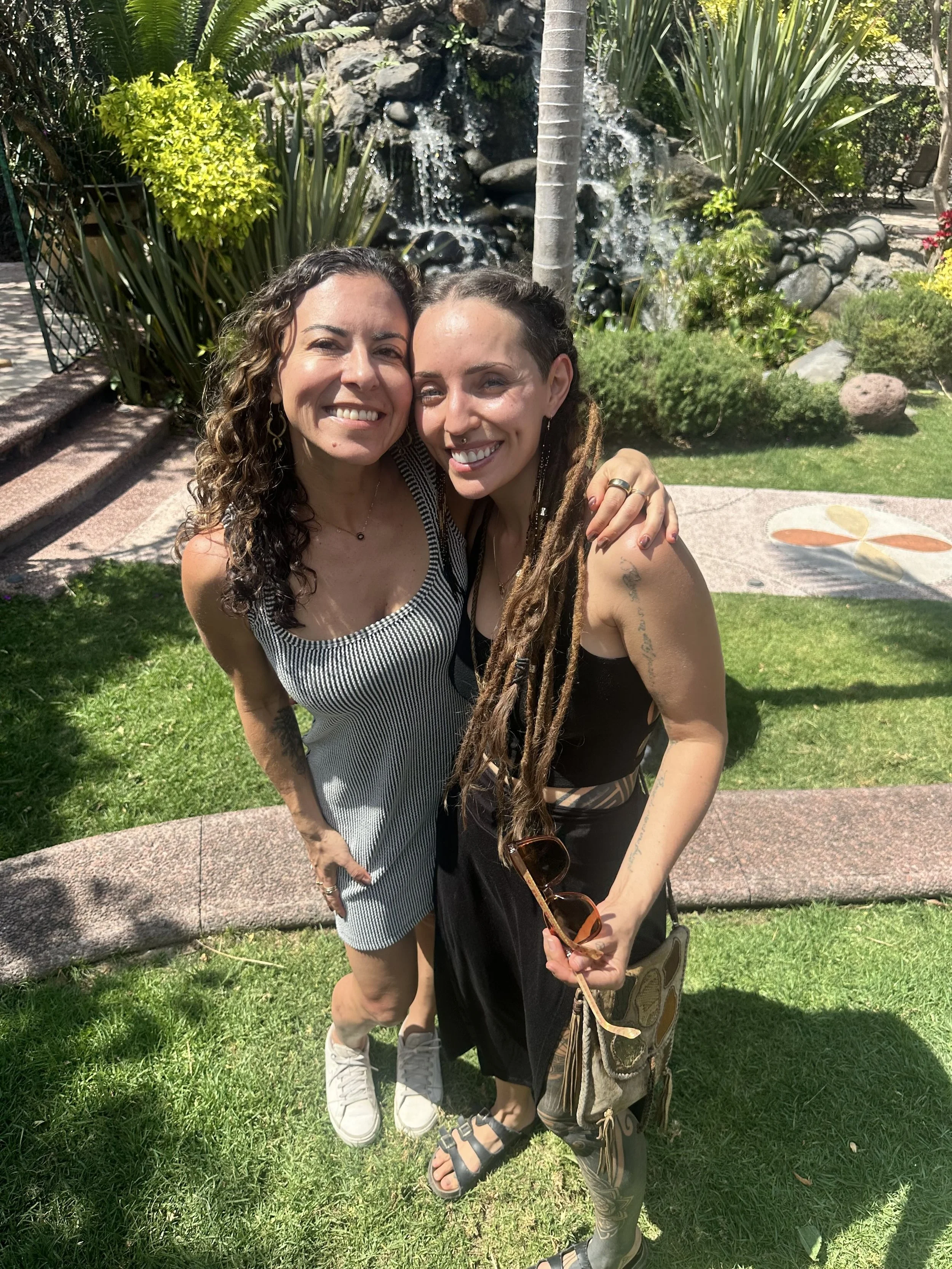
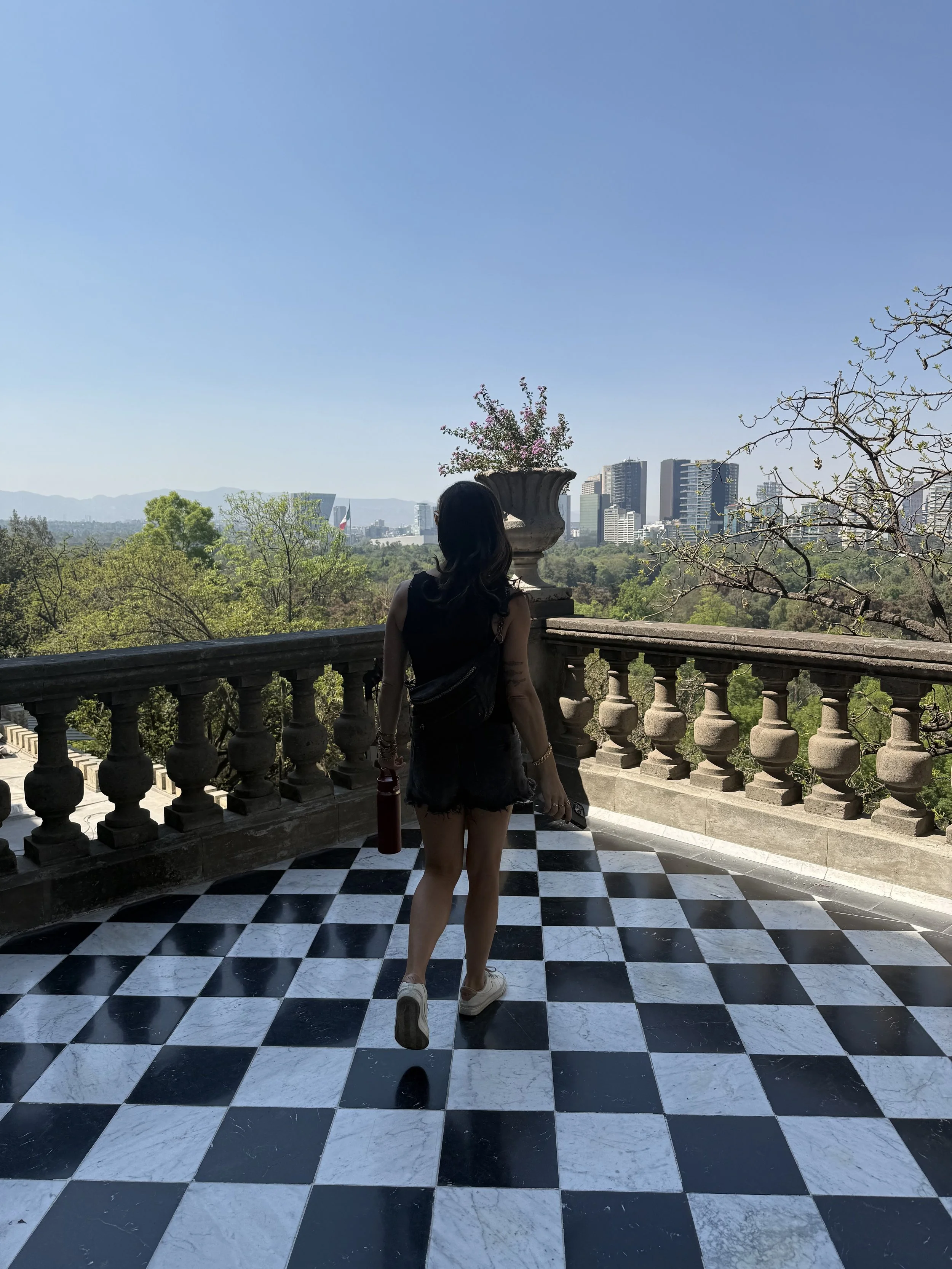
A few days exploring Mexico City with some of my closest girlfriends — all therapists, which tells you everything about our conversations — followed by time in Tepoztlán, a magical mountain town about an hour outside the city. I had plans to connect with Victoria and Joël, the founders of Tandava Retreats, a center I had attended twice as a participant and currently work with as an integration coach. After that, I was headed to Mazunte, a small coastal town on the Pacific that had been on my list for years. Sun. Ocean. Absolutely nothing on the schedule.
I was burnt out. Not in a dramatic, crisis kind of way — more the quiet kind, the kind that sneaks up on people who are very good at taking care of others and less practiced at receiving. I needed to decompress, disconnect from the pace of my practice, and simply be.
And then, in a car ride after brunch in Tepoztlán, everything changed.
The Moment
I was sitting with Victoria and Joël when I learned that one of their lead facilitators had unexpectedly become unable to join an upcoming retreat — a carefully held container for healing sexual trauma using 5-MeO-DMT. The retreat was 2 days away.
Before I had fully processed what I was hearing, I said: I’ll do it.
No pause. No deliberation. A full-body yes.
Not only would I be working with and learning from Victoria Wueschnur (one of the world’s experts in this molecule’s facilitation and education), I’d be working alongside Dr. Holly Richmond, a world-renowned sex therapist and somatic therapist whose work I have long admired, and Fabián Rodriguez, director of operations, retreat leader, and friend I trust deeply. This part still gives me chills — this was a dream I hadn’t even fully let myself dream out loud.
Next, we pulled up to El Centro, and I got out of the car. And the second-guessing began.
The Night After the Yes
Here is what I want you to know, whether you’re a client of mine or someone who stumbled onto this post: the second-guessing after a true yes is not a sign that the yes was wrong. It is almost always a sign that the yes was real.
That night, I sat with a lot. Real grief about giving up Mazunte — a place I’d wanted to visit for years, a trip I had genuinely been looking forward to. Nervousness about getting it “right.” The familiar hum of people-pleasing: Did I say yes because I wanted to, or because I felt I should? What if I’m not ready? What if I let someone down?
My therapist brain was doing what therapist brains do — analyzing, questioning, trying to audit the decision from every angle. But underneath all of that noise was something else. Something quieter and steadier.
My friends — bless them — knew exactly what to do. One of them set a timer for eight minutes and said: Talk. We’re here. We’re just going to witness.
So I did. For eight uninterrupted minutes, I talked out everything — the excitement, the grief, the fear, the disbelief, the old story that says I need to have it all figured out before I say yes to something. When the timer went off, I had the option to ask for reflections or simply sit in the silence of having been witnessed.
That simple act — being witnessed without advice, without problem-solving, without anyone trying to fix or rush me toward clarity — was exactly what I needed. I didn’t need my friends to tell me what to do. I needed to hear myself.
True Knowing vs. Analyzing to Get It Right
This is something I talk about a lot in my work. There is a difference between true knowing and analyzing to get it right.
True knowing tends to arrive fast. It lives in the body. It often comes before the rational mind has caught up. It may be accompanied by nervousness, even fear — but underneath that, there is an aliveness. A sense of yes, this.
Analyzing to get it right, by contrast, is the mind’s attempt to protect us from regret, from failure, from the discomfort of uncertainty. It asks: Is this the responsible choice? Am I ready? What will people think? What if it doesn’t work out? These aren’t bad questions. But they can become a way of talking ourselves out of what we actually want.
In somatic and parts-based work, we pay attention to where a response lives in the body. My initial yes was full-body: nervous, yes — but also lit up. Expanded. My second-guessing had a different texture entirely. It was tight. Contracted. It was the voice of protection, not wisdom.
This is not to say that hesitation is always fear and should be overridden. Sometimes hesitation is wisdom. The skill — and it is a skill, one I’ve spent twenty years developing, personally and professionally — is learning to tell the difference.
How the Night Ended
I went to bed knowing I was going. Not because the doubt had disappeared — it hadn’t entirely. But because I recognized, clearly, that if I got on a plane to the beach, I would spend my entire time on the sand thinking about the opportunity I had walked away from. The beach would have been beautiful. But it wouldn’t have been rest.
There is something Tandava has always represented for me: a place where profound healing happens, held with extraordinary care. I had experienced it firsthand as a participant — twice. I had witnessed it from a distance as an integration coach. And now I was being offered a seat at the table.
Mazunte will still be there.
A Note to Anyone Who Recognizes This Pattern
If you are someone who says yes from your gut and then immediately tries to talk yourself out of it — you’re not alone. In fact, this pattern shows up constantly in the work I do with clients: the immediate knowing, followed by the avalanche of doubt, followed by the exhausting project of trying to think your way to the “right” answer.
What helped me wasn’t more analysis. It was slowing down long enough to listen. To be witnessed. To let the body’s intelligence speak louder than the mind’s anxiety.
In Part 2, I’ll share what the retreat itself was like — what I witnessed, what I learned, and how working at the intersection of 5-MeO-DMT and sexual trauma healing deepened my understanding of both.
But first, I had to say yes.
Dr. Kristy Center is a licensed clinical psychologist with 20 years of experience and the founder of ReCentered Healing, a private practice in Denver, Colorado. As a psychologist she specializes in helping people process trauma using an integrative approach including EMDR, Hakomi somatic therapy, parts work, and ketamine-assisted psychotherapy. As a psychedelic integration coach she supports clients in translating non-ordinary states of consciousness experiences into actionable personal growth. She is a PSYPACT member offering tele-health across 40+ states and coaching worldwide.